Rovent: A Retro-Styled Display Font for Handmade Brands
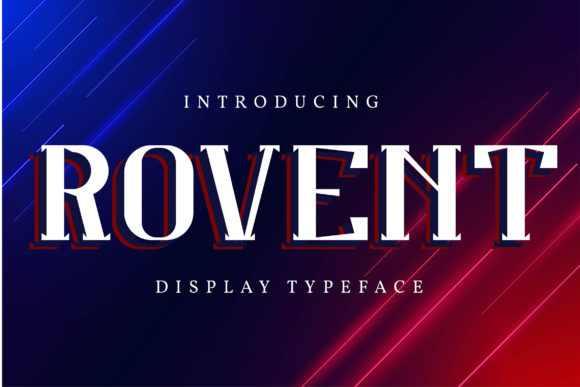
If you've ever spent hours searching for a font that feels both nostalgic and fresh—something that makes your candle labels pop, gives your wedding invitations instant charm, or turns a simple printable into a boutique-worthy piece—you’ll understand why Rovent has become my go-to display font this season. It’s not just another retro typeface; it’s an assertive, confident presence on the page—one that balances vintage appeal with modern clarity and commercial practicality.
Rovent lands somewhere between mid-century signage and contemporary craft typography. Its letterforms have subtle flares, gentle curves, and just enough contrast to catch the eye without sacrificing legibility. Think of it as the kind of font you’d see hand-painted on a farmhouse market sign—but digitized, refined, and ready for your Cricut, Silhouette, or print shop workflow. It’s bold enough for titles and signage, yet detailed enough to hold interest in small-format applications like sticker sheets or product tags.
Where Rovent Shines in Real Craft Projects
I use Rovent across nearly every physical and digital product I create—from printable planner pages to custom SVG bundles sold on Etsy. Here’s where it truly delivers:
- Candle and soap labels: Its retro warmth complements natural ingredients and artisan branding. On matte kraft paper, Rovent reads cleanly at 14–16pt, especially when paired with a minimalist sans serif for ingredient lists.
- Wedding stationery: Welcome signs, seating charts, and foil-stamped menus gain instant elegance with Rovent’s confident capitals—especially when layered over linen textures or soft watercolor backgrounds.
- Digital printables: Planner covers, habit trackers, and seasonal wall art benefit from Rovent’s visual weight. Because it’s PUA encoded, I can easily access alternate glyphs and swashes directly in design software—no character map digging required.
- Merchandise designs: Whether it’s a tote bag slogan, a mug quote, or a T-shirt phrase, Rovent scales beautifully. At larger sizes (36pt+), its expressive details shine; at smaller sizes (10–12pt), I stick to its cleanest caps-only layout for crisp vinyl cuts.
- Seasonal packaging: Holiday gift tags, Easter egg labels, and autumn market banners gain personality without looking dated—thanks to Rovent’s balanced proportions and restrained ornamentation.
Readability & Production Notes You’ll Actually Use
Let’s be real: a beautiful font means little if it doesn’t cut cleanly on your machine or print clearly on textured cardstock. Rovent holds up well across mediums—but here’s what I’ve learned through testing:
- For small stickers (under 1.5”), I avoid swashes and use only uppercase letters with generous spacing. The base characters are sturdy and maintain definition even at tiny sizes.
- On matte-finish product labels, Rovent prints crisply at 10–12pt with no ink bleed—especially when exported as vector outlines before printing.
- In Cricut Design Space or Silhouette Studio, I convert Rovent to outlines before cutting vinyl. Its moderate stroke contrast prevents fragile serifs from snapping during weeding.
- For mockups and social previews, Rovent adds instant credibility—it signals thoughtful design without needing explanation. Customers notice quality before they read a single word.
Smart Pairings That Elevate Your Brand
Rovent isn’t meant to stand alone on every project—and that’s part of its strength. Its assertive personality pairs beautifully with quieter companions:
- With a clean sans serif (like Montserrat or Inter) for contrast: Rovent headlines + sans body text = clear hierarchy for invitations, product descriptions, or digital templates.
- With a delicate script (think a light-weight connected script) for weddings or boutique branding: Rovent sets the tone; the script adds intimacy and movement.
- With a warm serif (such as Playfair Display or Cormorant Garamond) for editorial-style printables: creates depth and timelessness without competing visually.
Avoid pairing Rovent with overly decorative fonts—it’s expressive enough on its own. When in doubt, go minimal below it.
Licensing, Files, and What’s Included
Rovent is a commercial font designed for makers who sell. That means you’re fully covered to use it in physical products (like printed cards or embroidered patches), digital downloads (PDF templates, SVG files), merchandise (mugs, shirts), and client work—as long as you follow standard commercial license terms. Always verify the license details before bundling it into editable Canva templates or reselling font files themselves.
The PUA encoding is a quiet game-changer: all alternates, ligatures, and swashes live right where you expect them—in the standard keyboard positions—so no hunting through glyph panels. You’ll get OTF and TTF formats, making Rovent compatible with everything from Adobe Creative Cloud to free tools like Inkscape and DaVinci Resolve. While it’s not a multilingual font with extended Latin or Cyrillic support, it covers English, Western European, and common punctuation thoroughly.
Why Rovent Fits Your Shop—Not Just Your Mood Board
There’s a difference between a font that looks great in a mood board and one that works reliably across your entire product line. Rovent bridges that gap. It’s versatile enough to feel fresh on a spring greeting card and grounded enough to anchor a holiday collection. It communicates care, craftsmanship, and intention—not just trendiness. When customers see Rovent on your packaging or social graphics, they subconsciously associate it with authenticity and attention to detail.
It’s not a “one-size-fits-all” solution for body text or long paragraphs—that’s not its job. But as a display font? Rovent delivers consistency, character, and quiet confidence. Whether you're designing a welcome board for your local farmers’ market stall or building a cohesive brand identity for your Etsy shop, Rovent helps your voice stand out—without shouting.
If you’re choosing fonts for physical products, digital templates, or any handmade offering meant to connect with real people, Rovent earns its place in your toolkit—not because it’s trendy, but because it’s useful, beautiful, and built for the way makers actually work.